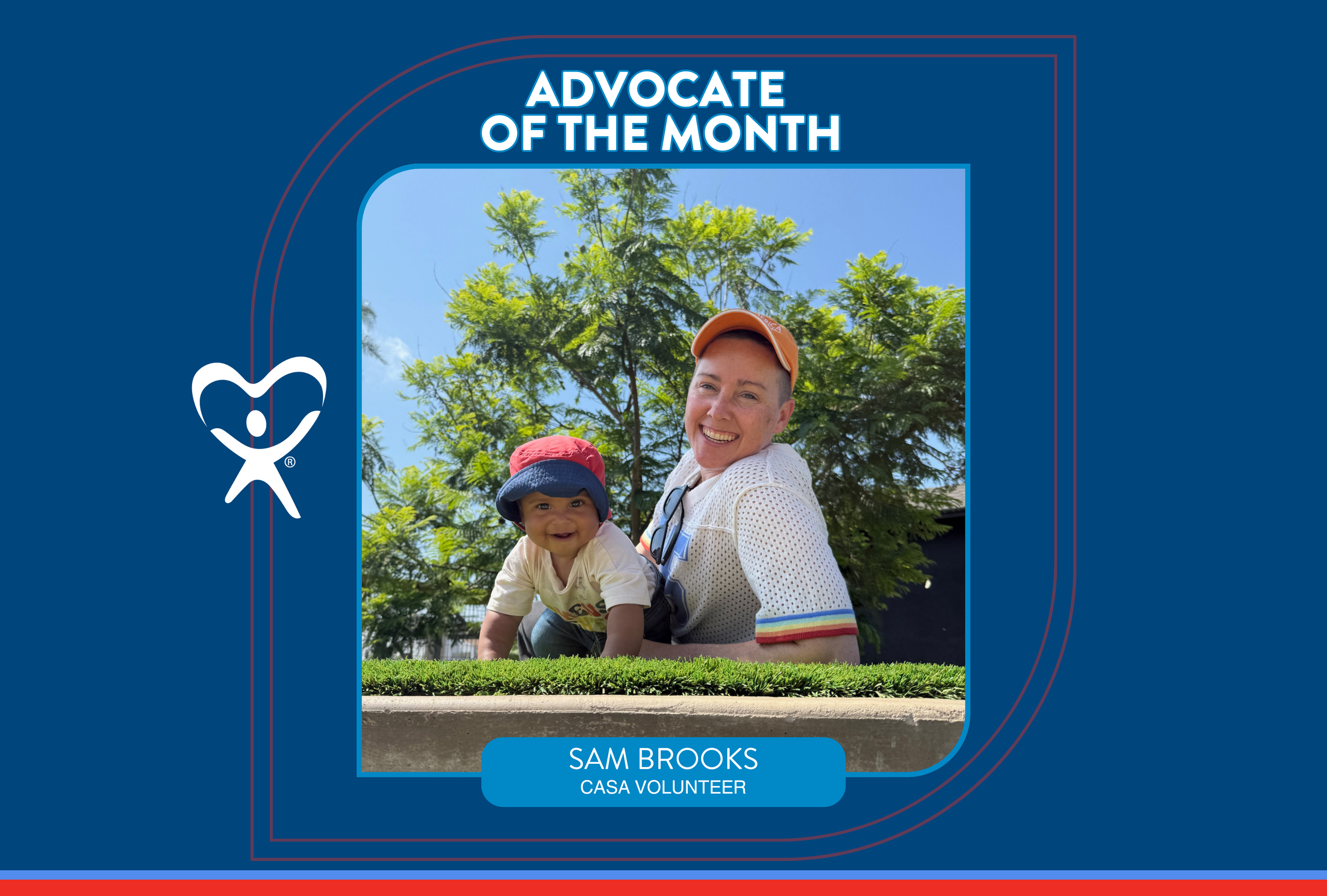
Sam Brooks didn’t quite know what to expect when he joined CASA. At the time, he and his wife were considering adoption, which partly motivated his decision to become an advocate. He was also inspired by his work at a nonprofit which supports women, trans, and nonbinary youth who have been involved in the foster care or juvenile justice systems.
“A lot of the people I work with have been in foster care or incarcerated,” Sam explains. “I was looking for a way to volunteer and felt I might have overlapping experience, having spent a short amount of time in Orange County Juvenile Hall as a youth growing up in South Orange County.”
As a teenager, Sam experienced rejection from his own family when he revealed he was gay at 15. “I was rejected by my family when I came out,” he shares. “I was able to stay with other people and never entered the foster care system, but LGBTQ+ youth are overrepresented in the dependency system—often due to family rejection, abuse, or neglect related to their identity.” Sam now identifies as a transgender man and uses he/him pronouns.
Around the time Sam became a CASA, he and his wife learned they were expecting a child. CASA matched him with a 20 year old transgender male who was aging out of the system within nine months, which aligned with the timeline of his baby’s birth. Today, his toddler is an active 15-month-old, and Sam is now matched with his second youth—a 16-year-old transgender boy.
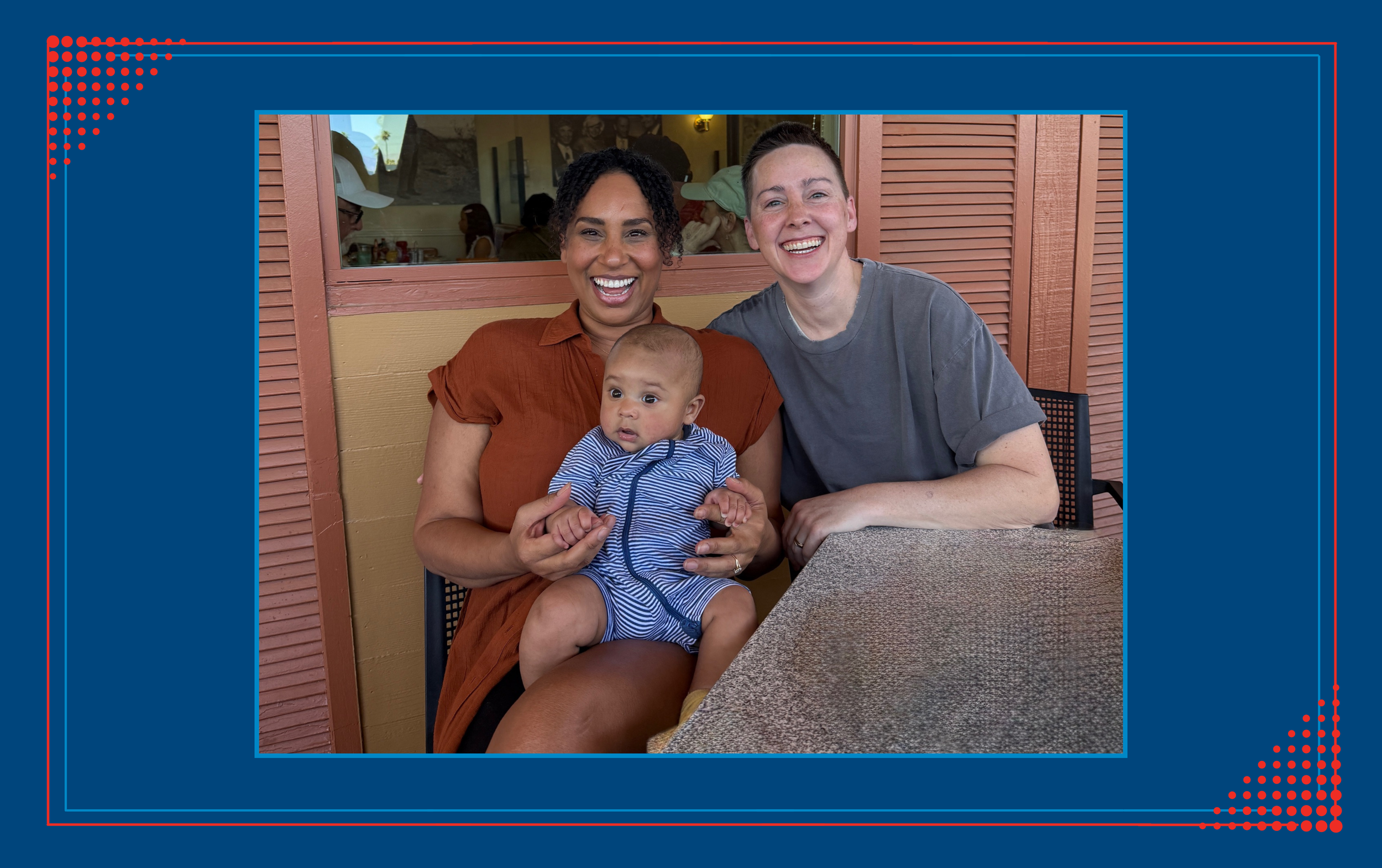
Sam pictured with his wife and son.
Sam balances his CASA advocacy with his work as a research consultant for a non-profit, while also pursuing a PhD and teaching as an adjunct professor at Rutgers University.
His academic work focuses on transgender individuals, who face disproportionately high rates of involvement in the dependency system, and the link between that system and later incarceration. “My dissertation examines how involvement in the dependency or juvenile justice system is one of the strongest predictors of incarceration and also shapes people's experiences of violence, trafficking, poverty, and houselessness later in life,” he says.
This research informs his advocacy with CASA youth. “Since LGBTQ+ youth are significantly overrepresented in the dependency system, supporting them means listening deeply, providing a judgment-free space, and connecting them with the resources they actually want—not the ones we assume they need.”
Reflecting on his experience working with two different youths, Sam emphasizes the importance of avoiding assumptions. “Identity categories can be limiting,” he says. “Some youth struggle with their gender identity, while others feel very comfortable with it. Some feel closely connected to the LGBTQ+ community, while others don’t. What makes the biggest difference are learned skills—like being thoughtful about how we, as advocates, talk about gender and how we show up for young people.”
Transgender and nonbinary youth often face unique challenges in the dependency system. “Placement can be especially difficult,” Sam explains. “A trans boy may feel uncomfortable being housed with girls, but unsafe being placed with boys or men. It’s complicated.”
He has also observed wide variation in foster care experiences. “Some youth have had incredibly affirming placements with foster parents, while others have not,” he says. "Some of the people in the dependency system--- social workers, lawyers, or foster parents---see gender nonconformity as negative, and so they read trans youth as troubled or even delinquent for that reason alone. "
Sam remains in contact with his first youth, who is now 22 and navigating adulthood in transitional housing. “We’re still friends, even though I’m no longer his CASA,” he says. “Funding for his housing is currently at risk, which makes achieving long-term stability more challenging for him. Support for young adults aging out of the system is relatively new—and incredibly important. Losing that support would be a huge setback.”
With his current youth, Sam serves as both advocate and mentor. “He’s asked me for advice on how to talk to his mom about his gender identity,” Sam shares. “What I had to say wasn’t really gender-specific, instead we focused on how to approach difficult conversations constructively and how to prepare if they don’t go as hoped. He sees his mom as a loving parent with his best interests at heart, and so I've tried to help him find compassion for her lack of understanding about his gender.”
Sam’s CASA supervisor, Bianca Gonzalez, has witnessed the impact of his work firsthand. “Throughout his current youth’s placement transitions, Sam has remained a consistent and supportive presence,” she says. “As a transgender man, he offers a trusted adult relationship grounded in shared lived experience. Their connection has provided affirmation, stability, and encouragement during a critical time.”
Sam is also supporting his youth as he begins preparing for college—arranging campus visits, exploring internships, and helping strengthen his resume. “We’ve been reaching out to professors and setting up informational interviews with professionals,” Sam says. “It’s about helping him see what’s possible.”
Ultimately, Sam believes advocacy starts with humility. “This work is about entering every relationship with openness and letting the youth guide you,” he says. “Anyone can support gender-nonconforming youth well. It’s not about sharing the same identity—it’s about showing up with curiosity, respect, and a genuine willingness to support.”
To learn more about how you can help vulnerable youth in the foster care system waiting for a CASA match, please contact Norma Mendoza at CASA OC.