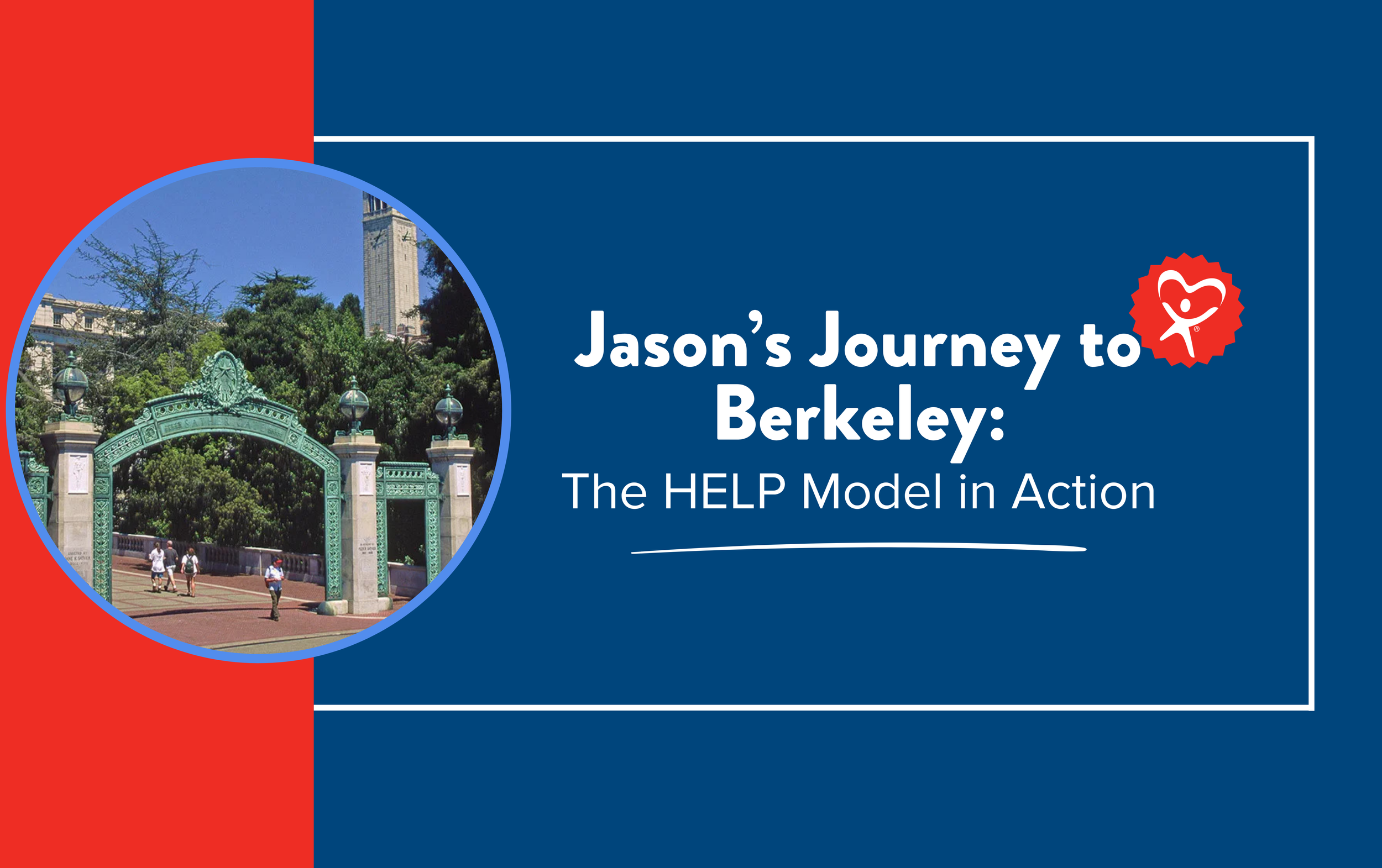
*Jason knew from the time he was only eight that he wanted to be an engineer. By thirteen, he’d set his sights on a degree from UC Berkeley. But the odds were stacked against him. As a youth in the foster care system, his chances of graduating high school hovered around 50 percent - the likelihood of pursuing higher education, only 10 percent.
So when Jason learned he was accepted for admission to Berkeley, it was a dream come true. He says, “I was very emotional - I called and texted everyone in my social circle. I just couldn’t believe that they selected me out of 133,000 applicants!”
Jason is quick to credit the community that rallied behind him to help him achieve this goal. He credits his long-time CASA of five years - Jennifer Minichiello, his college advisor Sue Freeman, high school counselors and loved ones with helping him along the way.
CASA OC CEO Regan Phillips sees Jason’s story as a powerful example of what’s possible when a community comes together.
“We’re thrilled to see Jason succeed,” she says. “This is what happens when people show up in different ways to support a young person. One of our board members, Jim Chergey, connected us with Sue Freeman, a college admissions counselor, who generously guided Jason through the process pro bono.”
Sue helped Jason navigate the arduous application process, “Working with Jason and his CASA Jennifer, we identified a list of the criteria that would create a positive and supportive college experience for him. We looked for colleges that offered strong engineering programs, good financial aid, a diverse student body, exceptional advising and career centers, significant student resources, and many opportunities to be part of an inclusive community.”
Jason’s hard work during high school paid off according to Sue.
“He did a good job in high school challenging himself with rigorous classes, and earning strong grades, despite difficult coursework. This set him up to be competitive for a wide variety of colleges. A key factor in his applications was providing context for his extraordinary accomplishments in light of his challenging home life. His advocate Jennifer was extremely supportive and wrote a strong letter of recommendation.”
Jennifer’s role coordinating all of the moving parts was central to the effort.
“I knew he would need help navigating college applications,” she explains. “Bringing in someone with Sue’s expertise was a first for CASA—and it made a real difference. Jason was accepted to multiple prestigious universities.”
This collaborative approach reflects CASA’s broader strategy described in the acronym, HELP—Health, Education, Life Skills, and Permanency. This evidence-based advocacy model is designed to guide advocates in ways they can support youth in holistic and effective ways.
Providing support with college admissions aligns directly with the Education pillar of the HELP Model. CASA board member & Finance Chair Jim Chergey explains, “It’s not easy for these kids. A student might be doing well in high school, but have no idea how to get into a four-year college. The entire process can be complex. There are real strategies involved in standing out at highly competitive schools. When I reached out to Sue, who is a family friend, she immediately wanted to help Jason.”
Expanding that kind of support network - across all four domains - is a key goal of the HELP model.
“It would be incredible to build a network of professionals with different specialties,” Jim says. “People who understand the nuances of various colleges, or who can help students navigate financial aid and scholarships.”
Regan agrees. “It’s inspiring to see how a community can come together to create opportunities and make dreams come true for hardworking students like Jason.”
Sue is on board to support more CASA youth, “My experience working with CASA and Jason was extremely rewarding. I hope to continue working with other highly motivated CASA youth to help them identify college opportunities that can change the trajectory of their lives.”
Jim and his colleagues at Deloitte are further supporting young people like Jason through an upcoming Impact Day where their team will collect and assemble materials for backpacks for local youth in foster care. They will also be hosting an Impact Fair where CASA and other non-profits will share their mission and volunteer opportunities with Deloitte team members. Jim says, “Deloitte recognizes the importance of making a meaningful impact in our communities and encourages our professionals to bring our purpose to life through volunteerism, service, and community engagement.”
Still, at the center of the story is Jason’s determination.
“When he first entered foster care, school was the one thing he could control,” Jennifer says. “He poured himself into it. He spent all his free time studying. His sisters also set a strong example by showing him that education matters.”
Looking ahead, Jason hopes to land an internship with a tech company in Silicon Valley. For students facing similar challenges, he offers simple but powerful advice:
“Focus on yourself. If you feel like you’re falling behind, try not to worry—most of the time, you’re not. If you’re thinking about college, you’re already on the right path.”
He also emphasizes the importance of support. “If you feel overwhelmed, having people you can talk to—even just to vent—makes a huge difference.”
Above all, Jason remains deeply grateful.
“I appreciate all the love and support I’ve received,” he says. “I am who I am—and I know what I want—because of the people who helped give me opportunities I never thought I’d have.”
If you would like to help CASA’s mission of supporting Orange County youth in foster care as a community partner, please contact Trena Berrier. If you’d like information on volunteering as an advocate, please contact Norma Mendoza.
*Name changed to protect privacy