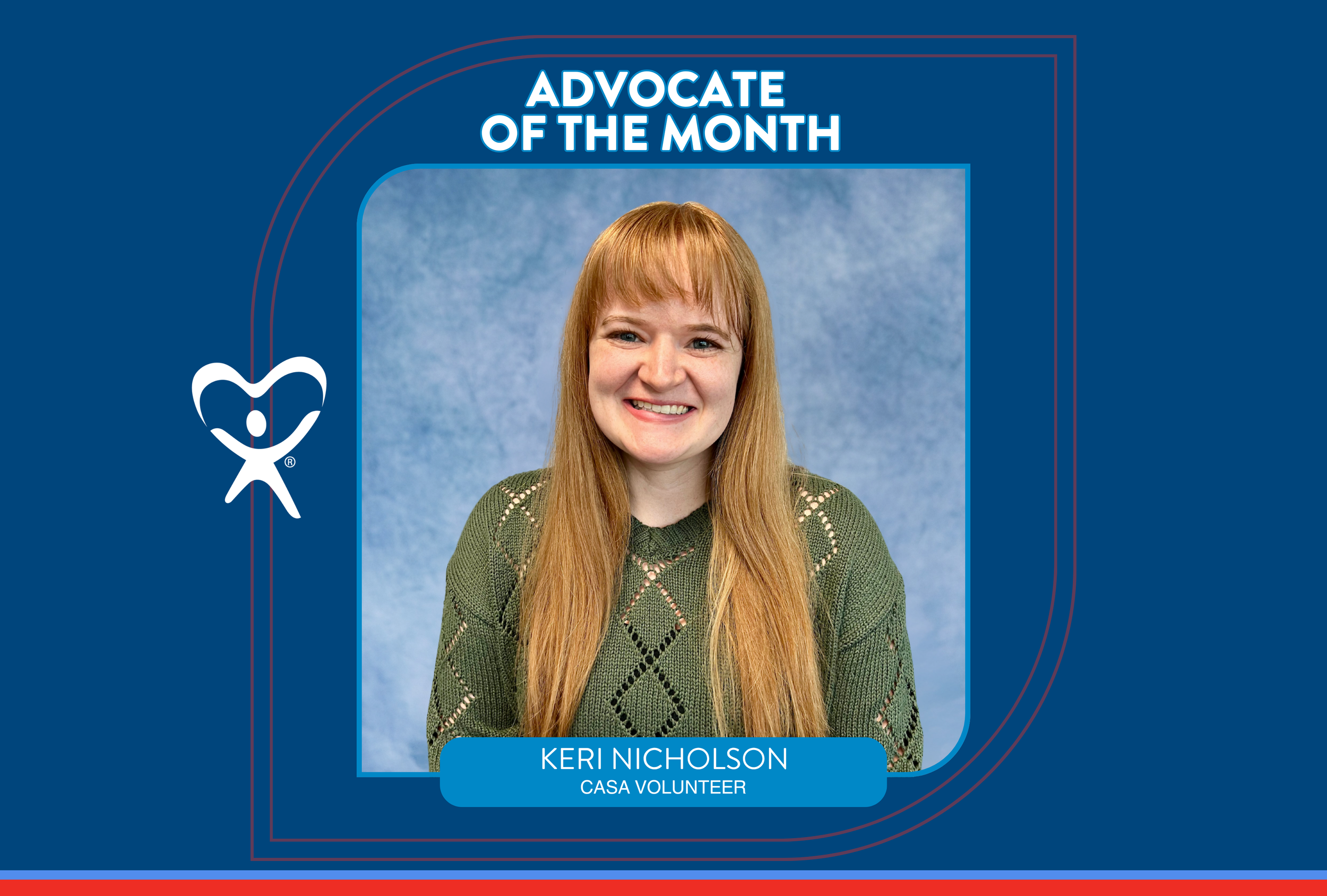
Keri Nicholson was listening to a podcast when she heard the story of a woman who donated a kidney to a complete stranger. It struck a chord. "I need to be doing more for others," she remembers thinking, "ideally something less painful than giving a kidney!" she adds with a laugh.
That instinct led her to a CASA OC Information Session. "I liked that CASA was a balance between spending time with a child and advocating with adults on behalf of that child," she says. "I was drawn to the dual roles."
About six months into her time as a volunteer advocate, a position opened on the CASA OC staff: Advocate Screening Coordinator. "At the time, being both an advocate and a staff member was unusual," Keri explains, "but I had really connected with the girl I was paired with. I realized that being a CASA had become part of my identity."
Since the two had become so bonded, Keri decided to accept the staff position and stay on as an advocate. When her first case ended, she was matched with a second youth — a match that continues today.
As Advocate Screening Coordinator, Keri reviews prospective volunteers, coordinates their interviews, and helps guide them into training. "The heart of my role is handling applications and interviews and supporting the training team," she says.
Working on staff while also volunteering as an advocate has its advantages. "It's nice having such easy access to Devin Juarez, my Advocate Supervisor, in case I ever need to talk about my case," she says. "And it helps to work with people who understand how unique the CASA role can be. When things get hard emotionally, I have people I can talk to confidentially — people who are also officers of the court."
That sense of trust made it easier for Keri to share something she'd rarely disclosed at work before: her ADHD diagnosis. "When I came on staff, it was one of the first things I shared about myself. I'd never told anyone at a job before, because the environment never felt safe. At CASA, I knew no one would react differently or make assumptions. Disability advocacy — including neurodiversities like autism, OCD, and ADHD — has been a passion of mine for years."
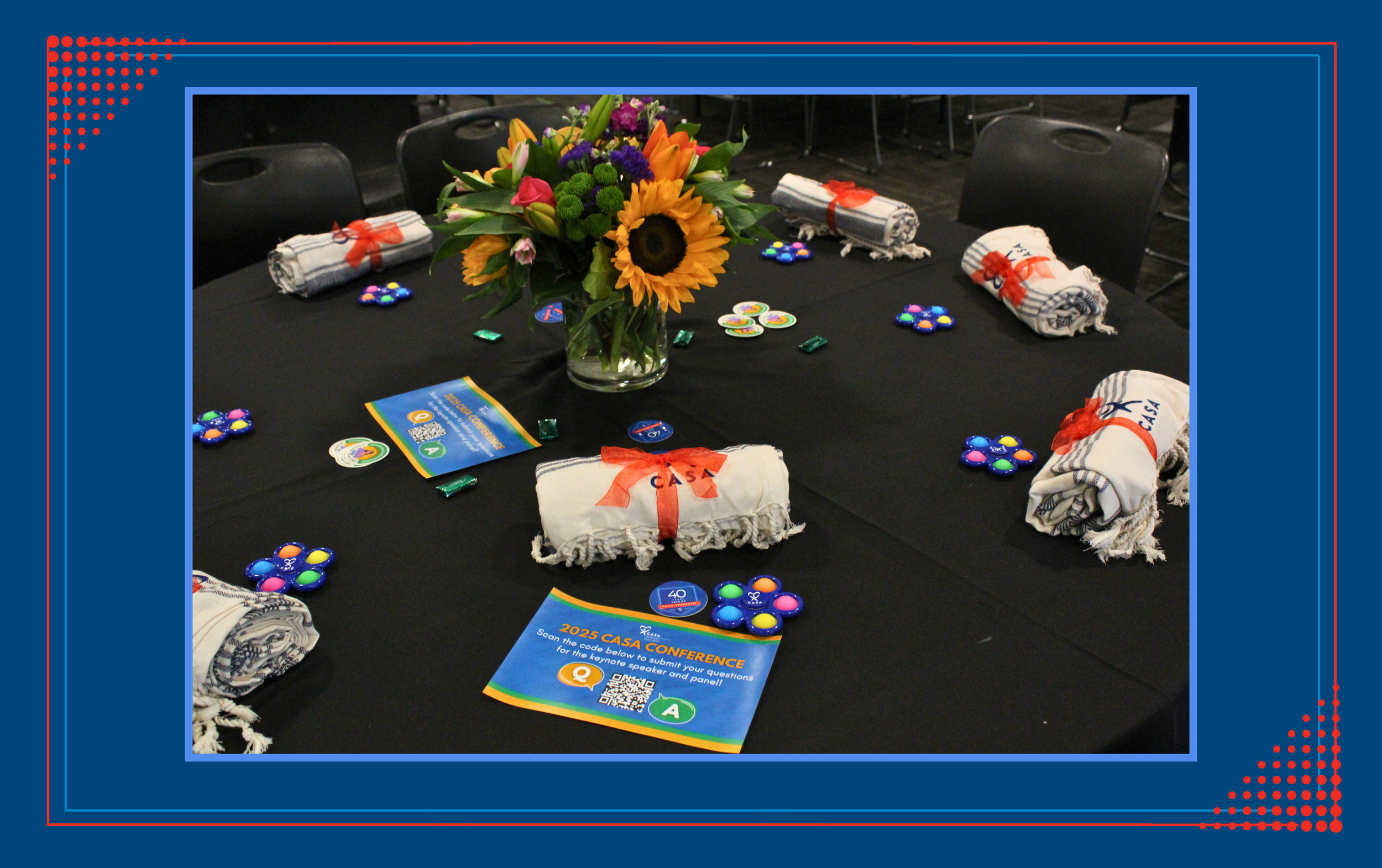
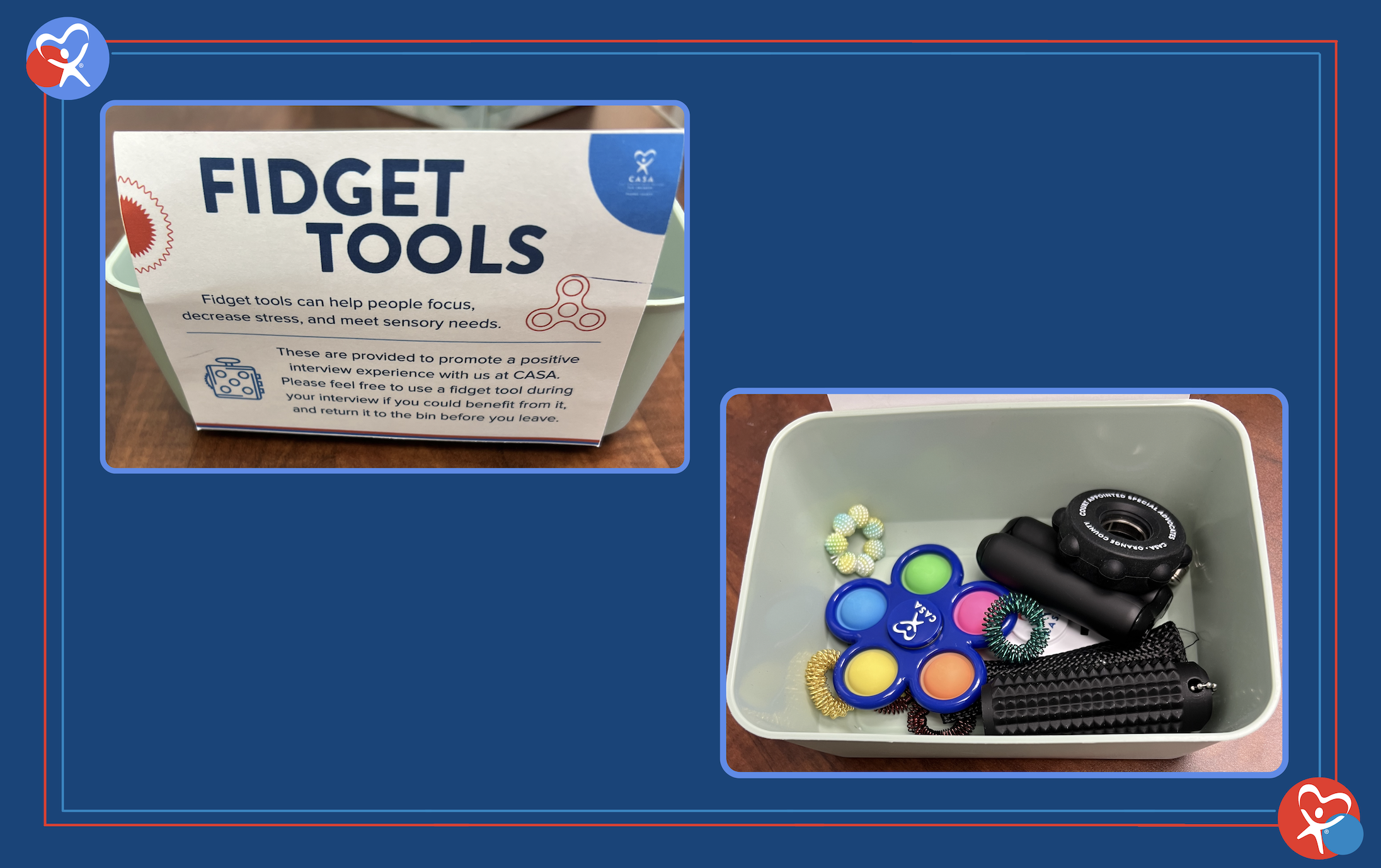
She's seen how bringing different perspectives into a workplace can improve it for everyone. One example: fidget tools, provided to attendees at the annual CASA OC Conference. "Having something to handle can help people with ADHD focus," Keri explains. "For my brain, it's easier to listen if my hands are moving. Otherwise my brain focuses on what my body's doing instead of what I'm hearing. Keeping my hands busy frees up the rest of my attention."
The tools have become part of how CASA supports its people. "When someone shares that they're neurodiverse, we can talk about how that might affect them in the role, and how we can best support them," Keri says. "We now offer fidget tools to staff and to anyone here for an interview. We try to be mindful about making things easier and more welcoming."
That awareness of diverse life experience shapes Keri's screening process, too — both in evaluating potential advocates and in making thoughtful matches with youth on the waitlist.
"We talk with potential advocates about their own experiences with trauma, abuse, and neglect, so we understand how to support them in the role," she says. "Sometimes that conversation makes someone realize a particular child's story might hit closer to home than they expected." The goal, she says, is making sure every match is healthy and sustainable — for the volunteer and the child alike.
Keri finds this deeply rewarding. "It's the cheesiest thing, but I always say my job is essentially to hear the life stories of the best people I've ever met," she says. "These are people who want to give their time to serve their community, and I get to hear how they got there."
CASA OC's training has grown to include more continuing education on supporting children with disabilities. "We noticed an increase in need among autistic youth last year, so we talked about adding training on how to best support these kids," Keri says. Her mother, who holds a doctorate in child and adolescent psychology and works with autistic youth, stepped in to lead a session on interpreting behavior.
"She created a handout — 'If This... Then That' — that helps people understand the underlying reason behind a behavior," Keri says. "If a child keeps running away, for example, here are some possible reasons why, and how you might address it."
Keri has applied that same thinking with her own CASA youth, who often tries to run away during outings. "I had to come up with a strategy to keep him from bolting at the park," she says. "We turned it into a game with a special code word — 'Doodle Dash' — during Hide & Seek. He thought it was hilarious. We agreed that whenever he heard me say it, he'd come back. I eventually realized his running away was driven by a need for attention, and together we built a system that changed the behavior."
Devin Juarez, Keri's Advocate Supervisor, has seen that same thoughtfulness play out in her casework. "Keri has built an amazing relationship with her little one," he says. "She is a comforting, calming, and consistent figure in his life, and they absolutely adore one another. She's always available for case updates and regularly stops by my desk with updates of her own. She attends every CFT, IEP, and school conference, and stays in close communication with case staff to support her youth."
Living with ADHD for years before her diagnosis taught Keri to look past behavior and ask what's driving it. "I struggled with executive dysfunction for a long time, especially in school, and I didn't understand why I couldn't just make myself do things I needed to do," she says. "Learning what was actually happening in my brain changed everything for me."
That lens carries into her work with CASA youth. "It's not just about neurodiversity — these kids have been through things no one should have to experience, especially not at their age," she says. "It helps to look at behavior holistically. If my youth is lying to me a lot, I try not to take it personally. Instead I ask: where did he learn that lying gets him what he needs? It's about how he's learned to navigate the world — seeing the behavior as just behavior, without judgment, and trying to understand what's underneath it."
For Keri, the fidget tools are about more than focus — they're a signal. "Making them available is great, but putting them out also tells people who are neurodiverse that we want them here," she says. "We want volunteers and staff to feel not just accepted, but wanted."
"And that helps our kids too," she adds. "They all come from different backgrounds and experience the world differently. We want our advocates to reflect that, so they can support our youth in the way each child actually needs."
Join CASA for an upcoming Information Session to learn how you can support local youth in the Orange County foster care system. Email Norma Mendoza to learn more.